All Posts

  • Positive Train Control in the United States: One Law, Five Systems
    Signal Systems

    Positive Train Control in the United States: One Law, Five Systems

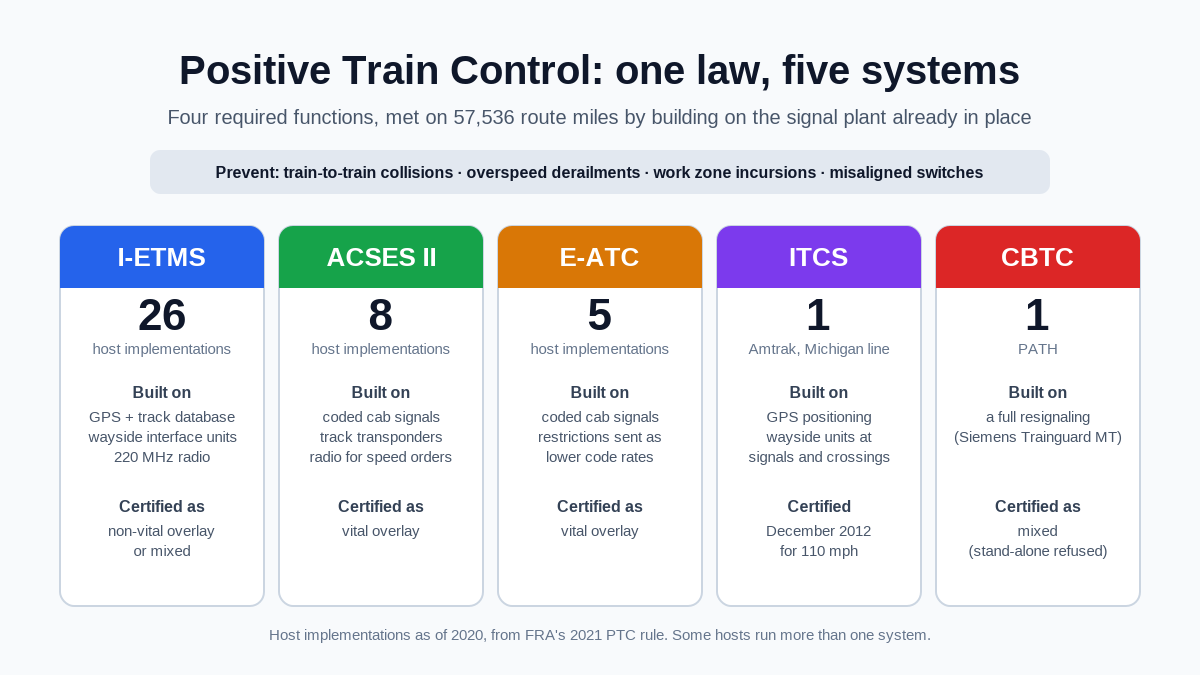
    Congress told the railroads what PTC had to prevent, never how. By the end of 2020, 41 railroads had met the mandate on 57,536 route miles with five different systems, each built on whatever signal plant was already in the ground. A series on how each one works, starting with the law and how FRA classifies a system's safety case.

    Justin Morrison18 min
  • PTC, Part 1: How I-ETMS Works
    Signal Systems

    PTC, Part 1: How I-ETMS Works

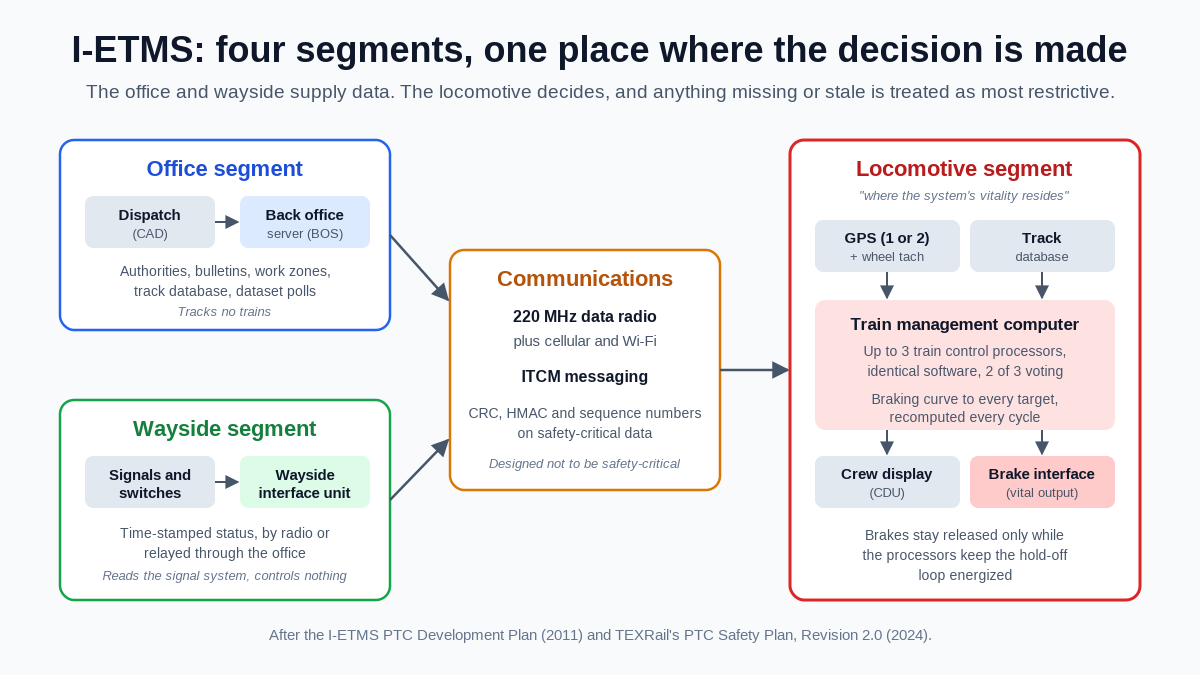
    I-ETMS is the PTC system on every Class I railroad and most commuter lines: a train that works out its own position from GPS and a track database, reads signals and switches by radio, and computes a braking curve to every target ahead. A theory of operation from the public filings, and the question FRA kept answering differently from the railroads: is it vital?

    Justin Morrison37 min
  • PTC, Part 2: How ACSES II Works
    Signal Systems

    PTC, Part 2: How ACSES II Works

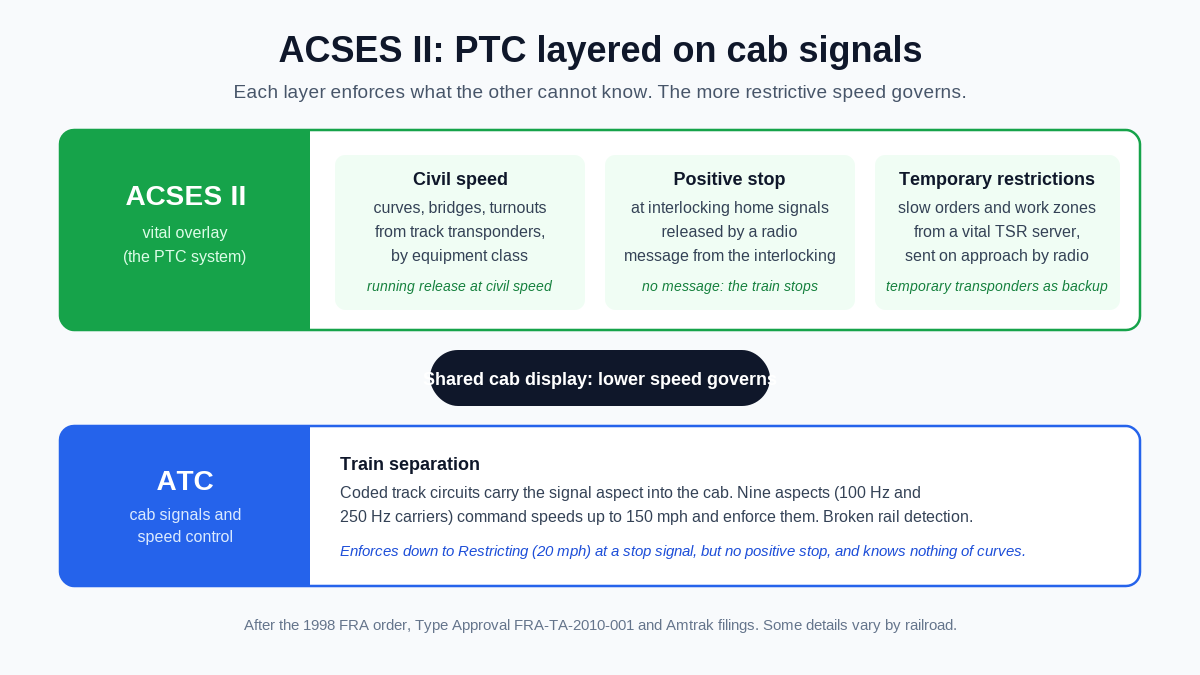
    On the Northeast Corridor, PTC did not have to keep trains apart: coded cab signals had done that for decades. ACSES adds what cab signals never did (civil speed, positive stop at home signals, temporary restrictions) using track transponders and a radio at each interlocking. A theory of operation from Amtrak's public safety plan and FRA's certification conditions, including the single point of failure FRA found in 2015.

    Justin Morrison34 min
  • PTC, Part 3: E-ATC, ITCS and PATH
    Signal Systems

    PTC, Part 3: E-ATC, ITCS and PATH

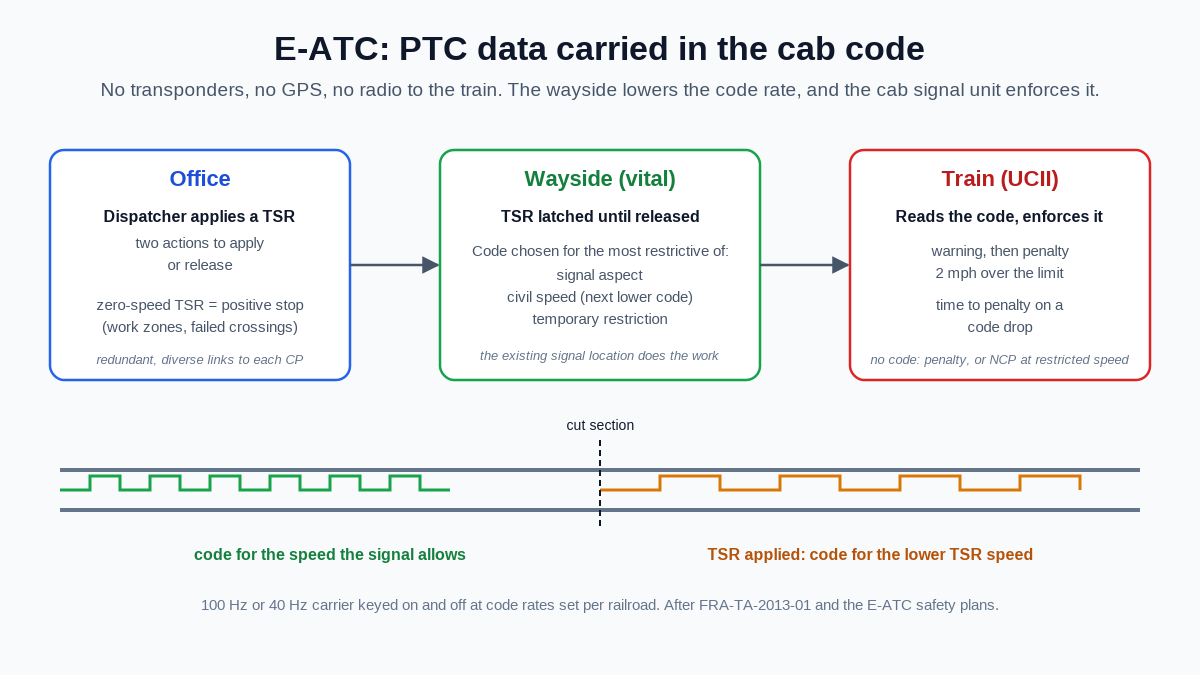
    Three of the five PTC systems in the United States serve seven railroads between them. E-ATC sends PTC data through the coded cab signal. ITCS, a GPS and radio system first used in 2000, still runs Amtrak's Michigan line at 110 mph. PATH replaced its signals with CBTC and found that FRA's categories did not fit. How each works, and what each shows about the rule.

    Justin Morrison23 min
  • PTC, Part 4: Interoperability
    Signal Systems

    PTC, Part 4: Interoperability

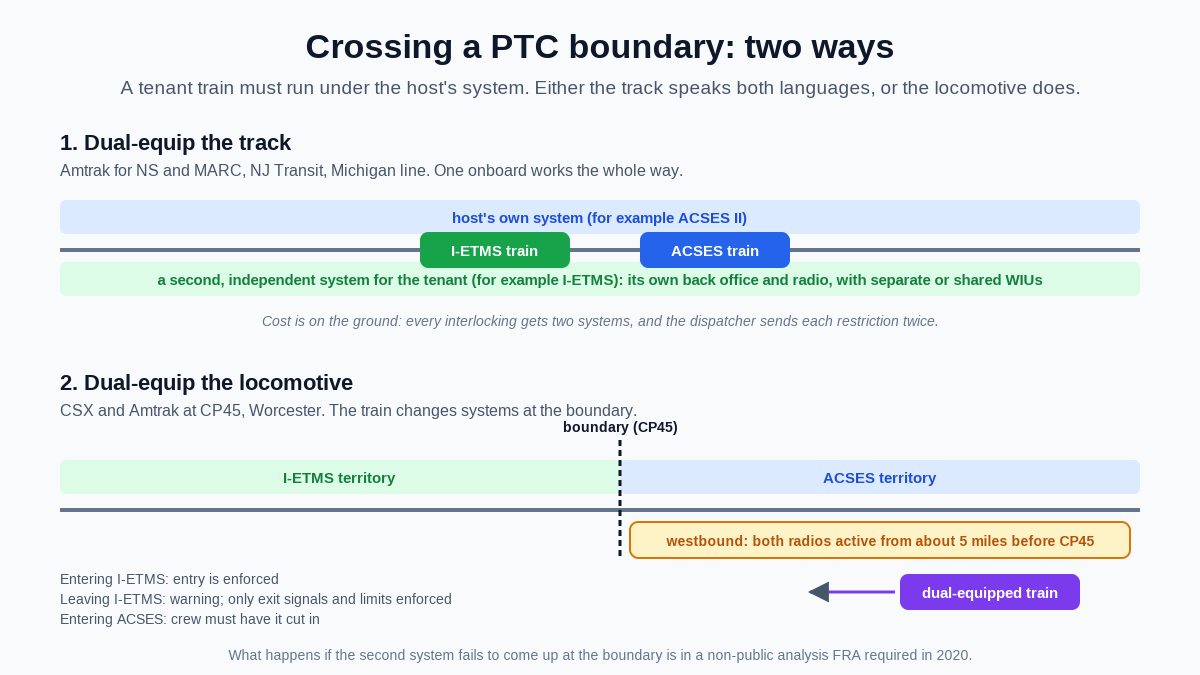
    A locomotive belongs to its owner, but the PTC system belongs to the track. Making 209 host and tenant pairs work meant dual-equipped waysides, a shared messaging network, a common onboard program, a 220 MHz band carved up between two incompatible systems, and a change control board for every software release. How it works, where it broke, and what is still not public.

    Justin Morrison21 min
  • How the UltraCab II Works: An Onboard Cab Signal Explainer
    Signal Systems

    How the UltraCab II Works: An Onboard Cab Signal Explainer

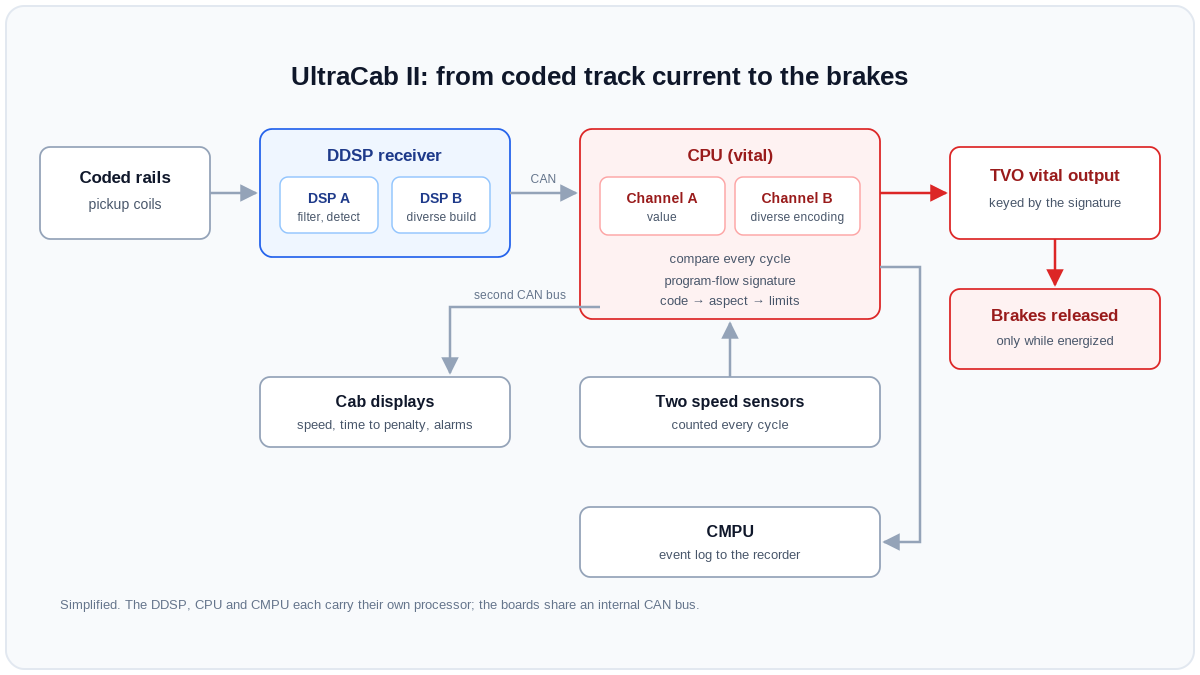
    Cab signaling puts the wayside aspect in front of the engineer and enforces it. A technical theory of operation of the UltraCab II onboard unit: the DSP receiver that turns rail current into a code, the vital computer that turns a code into braking decisions, and the layered design that makes one processor trustworthy enough to hold the brakes off.

    Justin Morrison19 min
  • Inside a Modern Vital Interlocking: How ElectroLogIXS Works
    Signal Systems

    Inside a Modern Vital Interlocking: How ElectroLogIXS Works

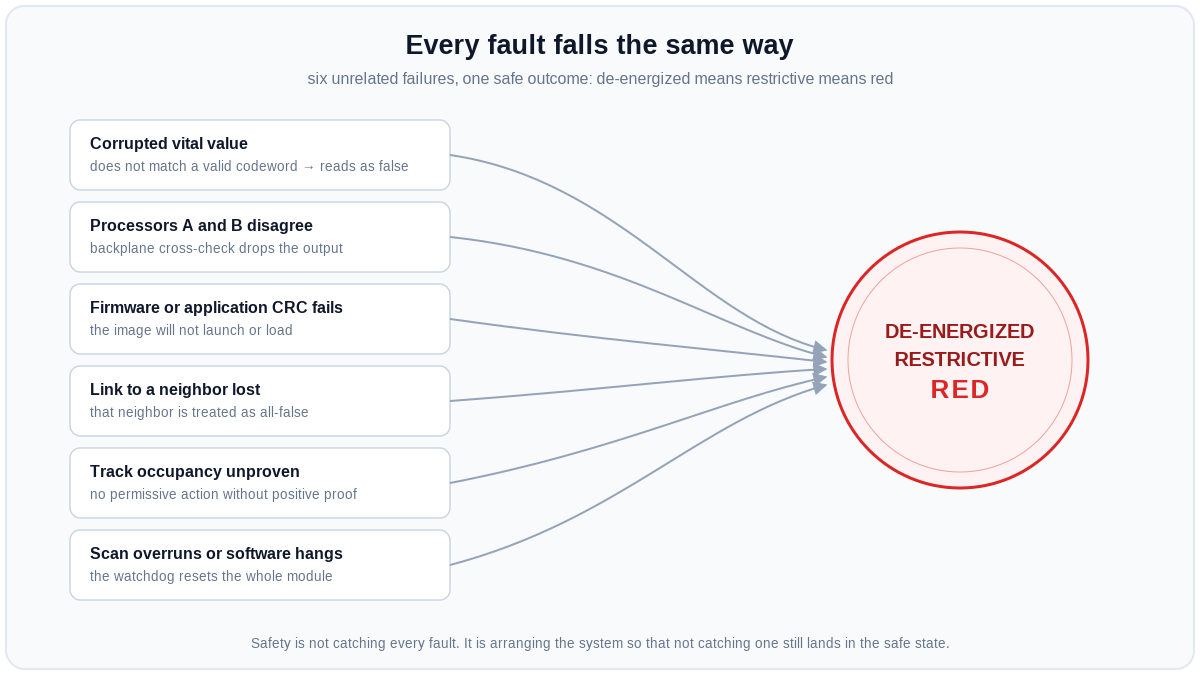
    A room full of vital relays fails safe because gravity drops the armature when the current stops. So when you replace that room with a single processor, the only question that matters is: where did gravity go? A technical theory of operation of the ElectroLogIXS platform, from power-on to a running control point.

    Justin Morrison17 min
  • Wayside Fiber: Three Layers, Three Failure Modes
    Signal Systems

    Wayside Fiber: Three Layers, Three Failure Modes

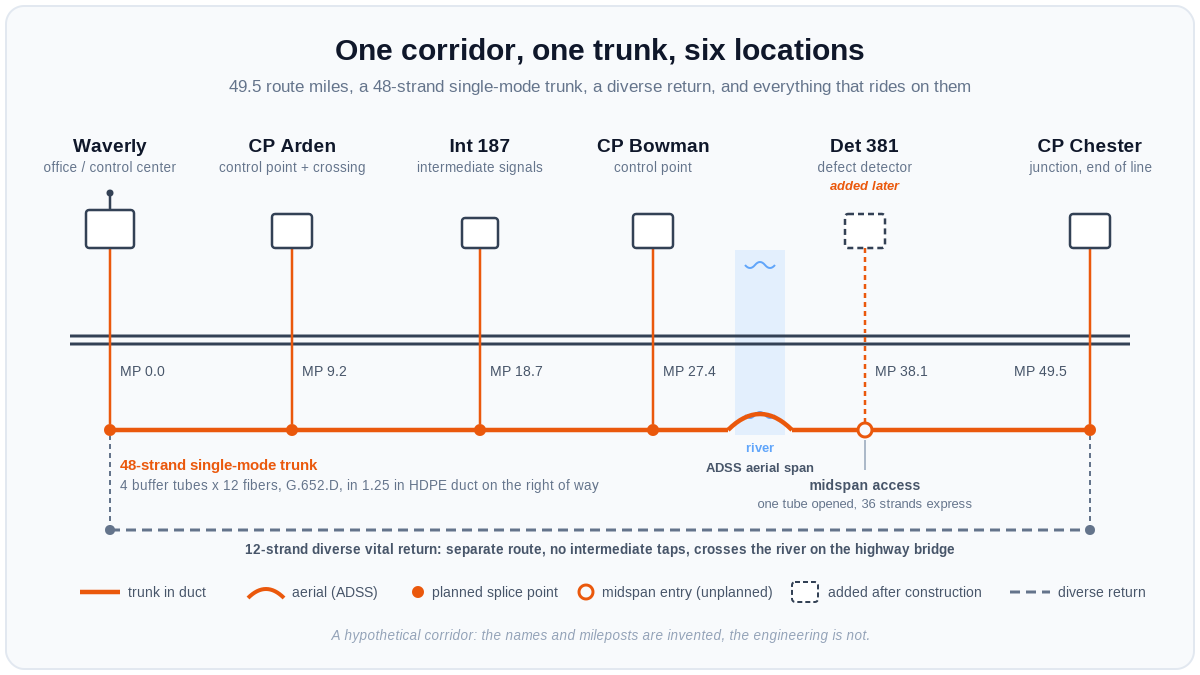
    A three-part series on the fiber plant beneath modern railroad signaling: where the cable physically runs, how the network on it talks, and who keeps the record true. One corridor, carried through all three parts.

    Justin Morrison3 min
  • Wayside Fiber, Part 1: Where It Is
    Signal Systems

    Wayside Fiber, Part 1: Where It Is

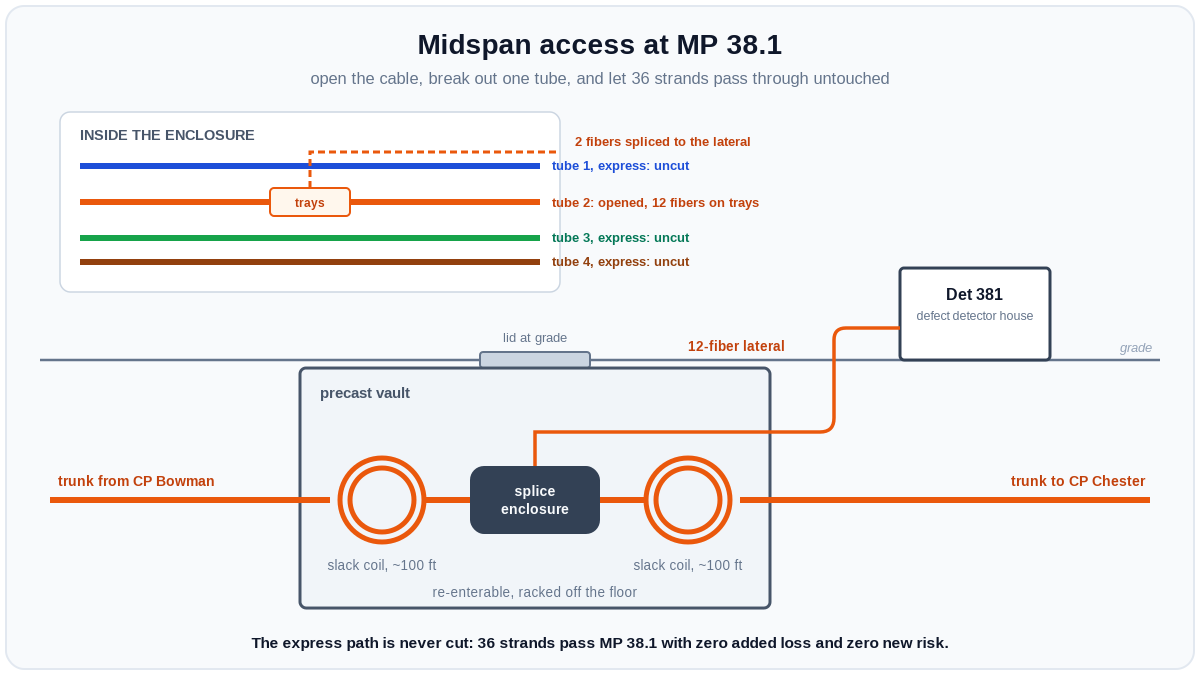
    The physical plant: why signaling went to glass, what lives inside a 48-strand cable, how a midspan access works without touching the express path, and how a loss budget quietly fails at the far end of a fifty-mile corridor.

    Justin Morrison25 min
  • Wayside Fiber, Part 2: How It Talks
    Signal Systems

    Wayside Fiber, Part 2: How It Talks

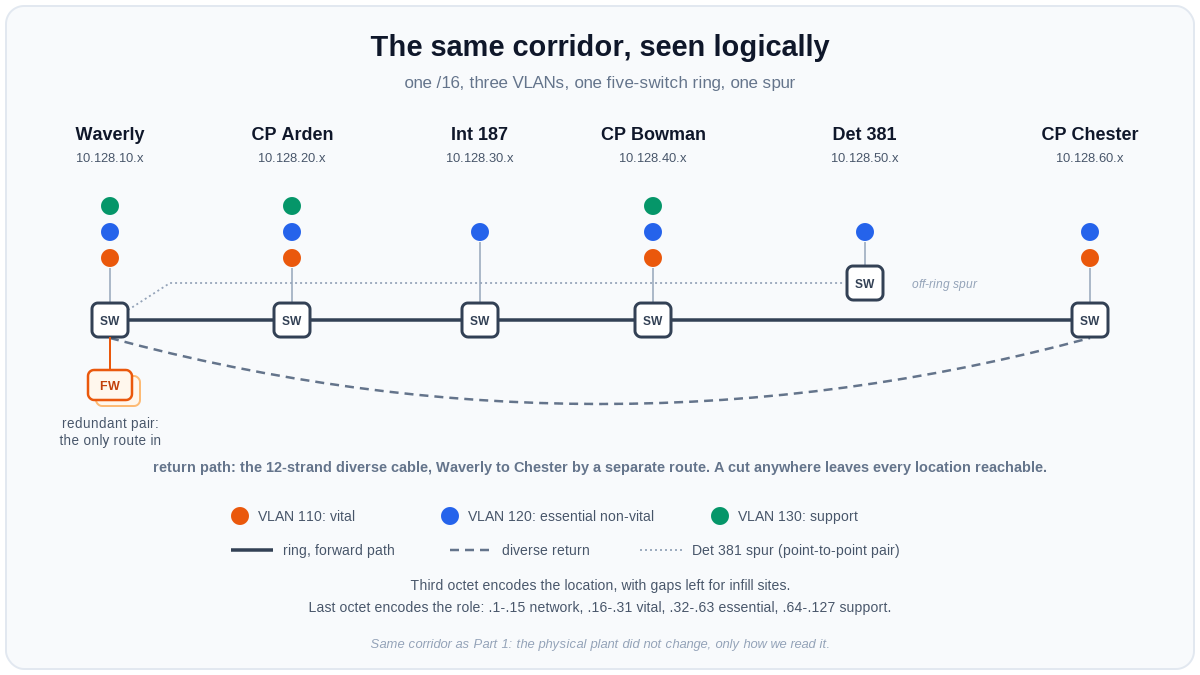
    The logical plant: which devices may share a wire with vital equipment, an addressing schema that encodes the corridor into four octets, and the race between ring reconvergence and a vital processor's stale-data timer.

    Justin Morrison12 min
  • Wayside Fiber, Part 3: Who Keeps It True
    Signal Systems

    Wayside Fiber, Part 3: Who Keeps It True

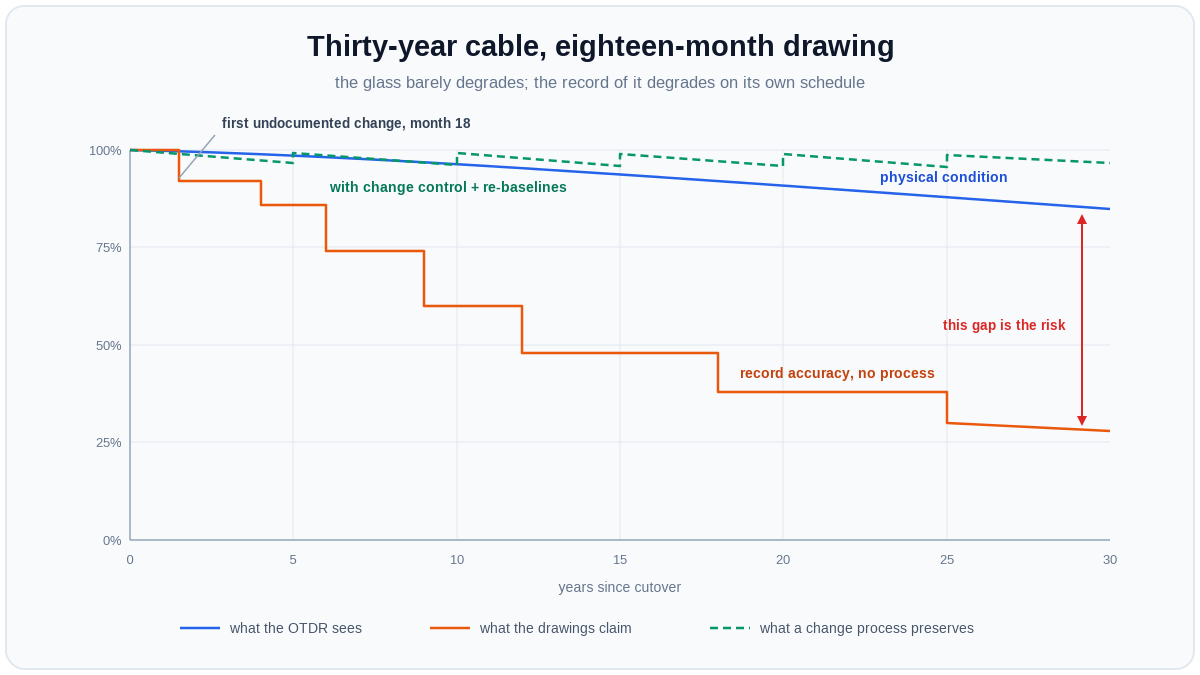
    The institutional plant: why the grant that built the corridor funds nothing that keeps its records accurate, how an OTDR baseline doubles as a defensible condition assessment, and why change control is the only difference between a record and a rumor.

    Justin Morrison9 min
  • Genisys: The Rail Signaling Protocol Nobody Documents
    Signal Systems

    Genisys: The Rail Signaling Protocol Nobody Documents

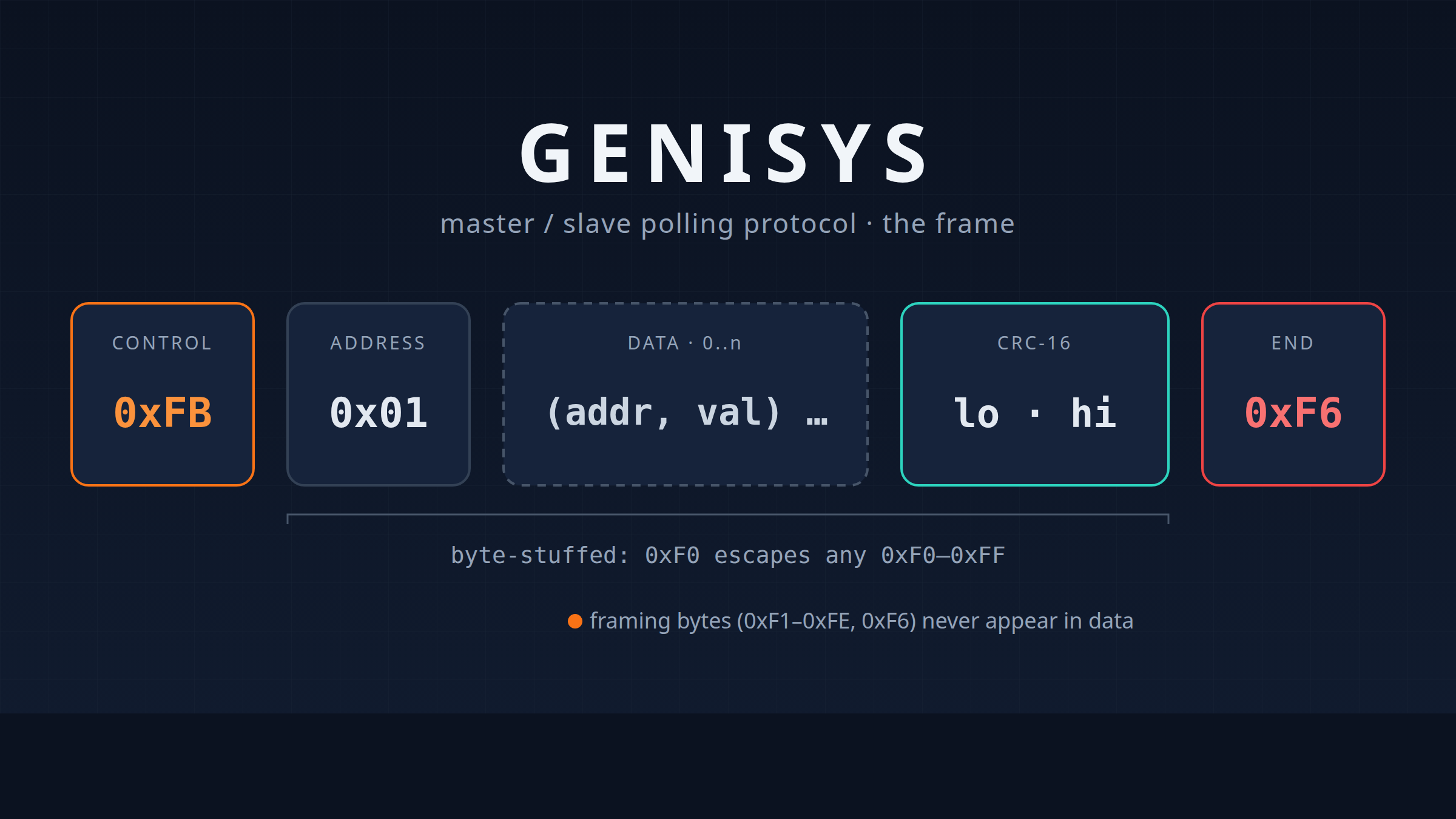
    The Union Switch & Signal master/slave polling protocol still moving non-vital code-line traffic across North American railroads: frame format, byte-stuffing, CRC-16, and the checkback control handshake, reconstructed from the vendor manuals.

    Justin Morrison7 min
  • Relays: The Fail-Safe Logic Behind Railroad Interlocking
    Signal Systems

    Relays: The Fail-Safe Logic Behind Railroad Interlocking

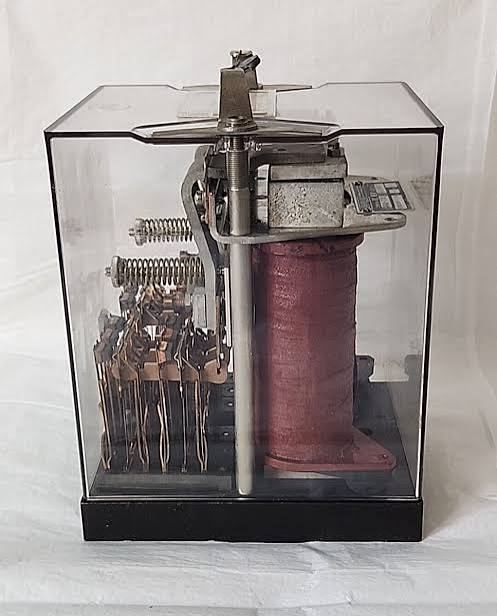
    For over a century the vital safety logic that keeps trains apart has been built from relays. How the signal relay works, why gravity makes it fail-safe, and how contact chains become interlocking logic that modern vital microprocessors still mirror.

    Justin Morrison7 min